
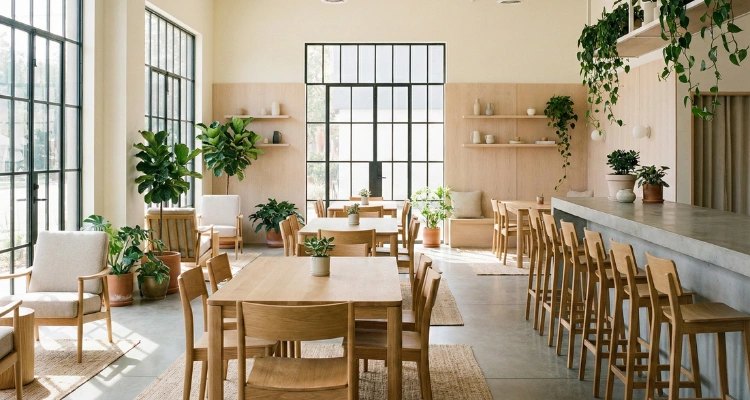
Key Takeaway
- Calculate your total space and subtract 30% for non-seating areas
- Divide remaining space by 18 sq ft to determine maximum seating capacity
- Reduce that number to 80% for realistic, comfortable seating targets
- Maintain 4-5 feet of clearance on main walkways
- Keep 18-24 inches between dining table clusters
- Mix furniture types (tables, chairs, relaxing zones, counter seating)
- Test traffic flow patterns before finalizing the layout
- Review and adjust layout quarterly based on customer feedback
Introduction
Planning a cafe furniture layout isn’t just about aesthetics. It’s a strategic business decision that directly impacts profitability, customer satisfaction, and operational efficiency. Whether you’re a furniture manufacturer supplying hospitality businesses or a cafe owner looking to optimize your space, understanding layout principles is essential.
At Palazzo Furnitures, we work with furniture manufacturers and interior furnishings businesses across the hospitality sector to create layouts that balance comfort, capacity, and visual appeal. This guide shares proven strategies for planning cafe furniture arrangements that drive higher revenue and better customer experiences.
Why Cafe Furniture Layout Matters
A poorly planned cafe layout forces customers to squeeze past tables, create bottlenecks near exits, and make staff efficiency impossible. Conversely, a well-designed layout increases table turnover, encourages longer dwelling times, and creates an inviting atmosphere that keeps customers coming back.
Research shows that layout optimization can increase seating capacity by 15-25% without adding square footage. For furniture manufacturers supplying the hospitality sector, this knowledge becomes a competitive advantage, it allows you to recommend layouts that directly increase your client’s ROI.
The layout also affects perceived value. A spacious, thoughtfully arranged cafe feels premium and relaxing, justifying higher menu prices and encouraging repeat visits.
How to Measure Your Cafe Space Before Planning
Start with accurate dimensions. Measure your entire cafe space, including:
- Total square footage
- Ceiling height
- Window and door locations
- Bathroom and kitchen placement
- Electrical outlets and utility locations
- Natural light patterns throughout the day
A simple formula: For a typical cafe, allocate 15-18 square feet per seat (including walkway space). A 1,000 sq ft cafe can comfortably seat 55-65 people, while an 800 sq ft space works well for 45-50 seats.
Document these measurements before selecting furniture pieces. This prevents costly mistakes and ensures your designer sofa sets, dining tables, and dining chairs fit proportionally within the space.
What’s the Ideal Spacing Between Cafe Tables?
Main walkways require 4-5 feet of clearance. This allows staff to move efficiently and customers to navigate comfortably during peak hours.
Between dining tables, maintain 18-24 inches minimum. This gives diners personal space without making the cafe feel empty or disconnected. Closer spacing works for high-volume, quick-service cafes; wider spacing suits upscale establishments where customers linger longer.
For counter seating with highchair-bar stools, allocate 26-30 inches per seat. This accommodates movement while keeping the counter intimate and social.
Consider sight lines too. Customers should never feel boxed in or unable to see the cafe entrance and counter. Strategic placement of relaxing chairs in corners creates cozy nooks without disrupting flow patterns.
Should You Use Individual Chairs or Banquette Seating?
This depends on your target customer and space constraints.
Individual dining chairs (like our designer sofa sets and dining chair offerings) provide flexibility; you can reconfigure the layout seasonally or for private events. They create formal, refined aesthetics and allow better legroom and comfort.
Banquette seating (upholstered bench seating along walls) maximizes capacity in compact spaces, creates intimate booth-style settings, and works exceptionally well with dining tables. It’s ideal for urban cafes where space is premium.
Hybrid approach: Combine individual chairs for flexible center tables with banquette seating along walls. This gives you the best of both worlds, scalability, and maximum seating efficiency.
For manufacturers supplying this market, offering both options positions you as a comprehensive home interiors and interior furnishings solution.
How Many Tables Can You Fit in a Cafe Space?
Calculate this strategically:
Step 1: Subtract non-negotiable space. Remove 10% for restrooms, hallways, and buffer zones.
Step 2: Allocate 20% for the counter, kitchen service area, and employee zones.
Step 3: From remaining space, divide by 18 sq ft per seat.
Example: 1,500 sq ft cafe
- Minus 150 sq ft (10% circulation) = 1,350 sq ft
- Minus 300 sq ft (20% service areas) = 1,050 sq ft
- 1,050 ÷ 18 = 58 seats maximum
However, don’t max out capacity. Aim for 80% of calculated capacity to maintain comfort and breathing room. In this example, target 46-48 seats, not 58.
Layout Patterns: Which Works Best for Your Cafe?
1. Linear/Row Pattern
Best for: Long, narrow spaces
Arrange dining tables and dining chairs in parallel rows facing the same direction. Minimizes cross-traffic and maximizes capacity in tight spaces. Works particularly well with individual chairs rather than large designer sofa sets, which need more turning radius.
2. Cluster/Pod Pattern
Best for: Open rectangular spaces
Group tables into clusters of 2-4 units, separated by clear pathways. This creates intimate zones, encourages communal vibes, and maintains defined traffic flow. Excellent for cafes wanting a sophisticated, varied atmosphere.
3. Perimeter Pattern
Best for: Square or open-concept layouts
Place seating around the edges, leaving the center open. Provides sightlines to the counter, creates a social hub feel, and maximizes wall space for relaxing chairs, bedside tables for magazines/displays, or wall-mounted shelving.
4. Hybrid/Organic Pattern
Best for: High-end or experiential cafes
Mix various furniture types-dining tables with dining chairs, relaxing chair zones, and a mix of table heights creating natural conversation areas. More complex to execute but creates memorable, premium experiences.
The Role of Seating Types in Layout Planning
Different seating styles serve different functions:
| Furniture Type | Best Use | Space Per Unit | Ideal Layout Zone |
| Dining Tables + Dining Chairs | Primary seating for meals | 20–24 sq ft | Center, organized zones |
| Designer Sofa Sets | Lounge areas, casual meetings | 25–30 sq ft | Corners, windowed areas |
| Relaxing Chairs | Individual work/reading spaces | 12–15 sq ft | Quiet corners, by windows |
| Highchair-Bar Stools | Counter/bar seating | 8–10 sq ft per seat | Along counter edges |
| Outdoor Furniture | Patio extensions | 15–18 sq ft | Exterior, weather-protected |
Strategic mixing of these types prevents monotony, accommodates different customer needs, and maximizes space efficiency. A well-designed cafe serves solo workers (relaxing chairs), couples (intimate tables), and groups (larger dining table clusters).
Step-by-Step: Your Cafe Furniture Layout Planning Process
1: Map Your Foundation
- Draw your space to scale (1:50 or 1:100 ratio)
- Mark immovable elements (walls, doors, windows, utilities)
- Identify natural focal points (entrance, counter, restroom signage)
2: Define Zones
- High-energy zone: Near entrance, quick turnover, bright lighting
- Comfort zone: Windowed areas, softer lighting, relaxing chairs
- Social zone: Center space, mixed table sizes, encourages lingering
- Quiet zone: Back corner, individual seating, minimal traffic
3: Place Anchor Furniture
- Position your dining tables first (largest furniture pieces)
- Add dining chairs, ensuring proper spacing
- Place relaxing chairs in corners and windowed areas
4: Add Secondary Elements
- Integrate designer sofa sets in key zones
- Position highchair-bar stools at the counter
- Identify spots for outdoor furniture (if applicable)
5: Test Traffic Flow
- Trace customer pathways from entrance to counter to seating
- Identify bottlenecks or awkward turns
- Ensure emergency exits remain clear and accessible
- Verify staff can move efficiently during service
6: Refine and Optimize
- Adjust spacing based on sight lines
- Consider acoustic properties (sound shouldn’t echo uncomfortably)
- Ensure lighting illuminates seating zones evenly
- Test furniture arrangements with photos or mockups before committing
Maximizing Seating Without Sacrificing Comfort
Smart spacing tricks:
- Use vertical height variation. Mix table heights (standard 30″, high-top bar heights, low seating with relaxing chairs) to create visual interest while maintaining perceived spaciousness.
- Choose furniture proportions wisely. Slim-profile dining chairs take less visual space than bulky ones. Designer sofa sets with clean lines feel less imposing than overstuffed alternatives.
- Optimize walkway width. Main paths need 4-5 feet; secondary paths can be 3 feet. This saves square footage without compromising safety or accessibility.
- Float furniture strategically. Don’t push all the tables against the walls. Floating center arrangements create better sightlines and can actually allow for tighter spacing without feeling cramped.
- Use mirrors and lighting. These create illusions of space, allowing you to comfortably fit more seating without literal expansion.
Common Layout Mistakes and How to Avoid Them
Mistake #1: Over-Packing Seating Adding too many tables creates a chaotic, unwelcoming atmosphere. Customers feel rushed; staff can’t serve effectively, and perceived value drops. Target 80% of maximum capacity instead.
Mistake #2: Ignoring Sightlines If customers can’t see the entrance, counter, or other diners, they feel isolated. Always maintain clear visual connections throughout your cafe.
Mistake #3: Insufficient Storage and Transitions Jamming furniture together leaves no room for coats, bags, or personal space. Design a breathing room between seating zones.
Mistake #4: Inconsistent Furniture Scale Mixing oversized dining tables with tiny relaxing chairs creates visual chaos. Maintain proportion of consistency or use intentional contrast as a design statement.
Mistake #5: Neglecting Accessibility Ensure clear paths for wheelchairs, accessible seating options, and accessible restroom routes. This isn’t optional; it’s legally required and ethically essential.
How Furniture Choice Impacts Your Layout Options
The furniture you select directly constrains or enables layout possibilities. At Palazzo Furnitures, our range includes:
Flexible Options:
- Dining tables and dining chairs in various sizes support modular arrangements
- Relaxing chairs with small footprints fit into corners and niches
- Highchair-bar stools adapt to various counter configurations
Space-Saving Options:
- Compact designer sofa sets provide seating efficiency without bulk
- Stackable or foldable outdoor furniture enables seasonal reconfiguration
- Exquisite luxury beds (for cafe lounges or upscale seating zones) command premium pricing and justify higher table costs
When selecting furniture for your cafe layout, prioritize pieces that align with your spacing strategy, not the other way around. Work with a furniture manufacturer who understands hospitality design, not just aesthetics.
Conclusion: Ready to Optimize Your Cafe Layout?
The difference between a cramped, uncomfortable cafe and a thriving hospitality space comes down to thoughtful furniture placement and smart space planning. Whether you’re a furniture manufacturer looking to advise clients or a cafe owner ready to redesign your space, the principles in this guide work universally.
Palazzo Furnitures specializes in creating tailored furniture solutions for home interiors and hospitality spaces. Our range of dining tables, dining chairs, designer sofa sets, relaxing chairs, and specialty seating helps businesses maximize their layouts while maintaining premium aesthetics.
Get a Free Consultation: Contact us to discuss your specific space, customer base, and layout goals. We recommend furniture options that maximize your seating while enhancing your brand.
Explore Our Furniture Ranges: Browse our collection of dining tables, relaxing chairs, designer sofa sets, and specialty seating at Palazzo Furnitures. Each piece is selected for hospitality environments.
FAQ: Cafe Furniture Layout
1. What’s the minimum square footage needed for a functional cafe?
A functional cafe needs at least 400-500 square feet to accommodate a counter, service area, and 25-30 seats comfortably. Anything smaller limits operational efficiency and customer experience.
2. How often should I reconfigure my cafe furniture layout?
Review your layout seasonally (quarterly) and make adjustments based on customer feedback and traffic patterns. Major reconfigurations every 12-18 months keep spaces fresh without complete overhauls.
3. Can I increase seating without expanding my space?
Yes, through strategic spacing (18 sq ft per seat), selecting compact furniture, and optimizing vertical space. You can typically increase capacity 15-25% through layout optimization alone.
4. What’s the best ratio of individual chairs to lounge seating?
For most cafes, aim for 60-70% traditional dining tables with dining chairs, 20-25% relaxing chair areas, and 10-15% counter/bar seating with highchair-bar stools. Adjust based on your target demographic.
5. How do I know if my layout is working effectively?
Monitor metrics: average table at dwell time, number of customers turned away during peak hours, staff efficiency (orders served per hour), and customer satisfaction surveys. High numbers across these indicate good layout performance.
6. Should outdoor furniture be included in my total seating calculations?
Only if it’s weather-protected or used year-round. For seasonal outdoor seating, calculate it separately and use it to offset weather-dependent demand fluctuations.
7. What role does lighting play in cafe layout planning?
Lighting affects perceived spaciousness, comfort, and mood. Well-lit seating zones feel more inviting and spacious. Task lighting over tables enhances intimacy; ambient lighting creates openness. Plan lighting as part of your layout strategy.