
Introduction
Bar stools are one of the most versatile seating options in modern home interiors furniture. A well-chosen bar stool adds style to your kitchen, saves floor space, and turns a plain counter into a social gathering spot. A poor choice leads to daily discomfort and a mismatched interior.
The three factors that decide whether a bar stool works or fails are height, material, and style. This buying guide breaks down each factor with clear measurements, comparison tables, and practical tips to help you buy with confidence.
At Palazzo Furnitures, Ahmedabad’s leading furniture showroom, we offer a customized range of high-chair-bar stools alongside designer sofa sets, dining tables, relaxing chairs, and more — every piece built to blend comfort with lasting quality.
Key Takeaways
- Height: Seat should sit 25–30 cm below the counter surface.
- Material: Wood and metal last longest; plastic is budget friendly.
- Style: Match at least two elements (material, colour, or era) with existing décor.
- Comfort: Priorities of footrests, backrests, and 38–45 cm seat width.
- Spacing: Allow 53–61 cm per stool and 66–76 cm between centers.
- Safety: Check for 100 kg+ capacity, anti-tip bases, and non-slip pads.
- Maintenance: A well-maintained stool lasts 5–15 years.
Choose the Right Bar Stool Height
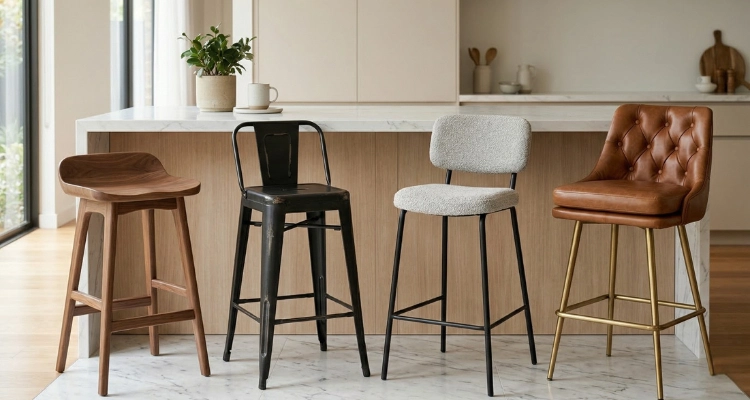
Bar stool height is the single most important factor in your purchase. A stool that is too tall or too short will feel uncomfortable and look out of place against your counter.
The golden rule is simple. Maintain a gap of 25 to 30 cm (10 to 12 inches) between the top of the seat and the underside of the counter. Measure your counter from the floor to its underside, then subtract 25–30 cm. That number is your ideal seat height.
Standard Bar Stool Height Categories
|
Stool Type |
Seat Height |
Best Counter Height |
Common Use |
|
Counter-Height Stool |
60–66 cm (24–26 in) |
88–91 cm (35–36 in) |
Kitchen, breakfast bars |
|
Bar-Height Stool |
71–76 cm (28–30 in) |
102–107 cm (40–42 in) |
Home bars, pub tables |
|
Extra-Tall Stool |
84–91 cm (33–36 in) |
112–117 cm (44–46 in) |
Commercial bars, high counters |
|
Adjustable Stool |
60–82 cm (24–32 in) |
Multiple heights |
Multi-use spaces, families |
Most Indian kitchen counters range from 86 to 92 cm. This makes counter-height stools the safest and most common choice for residential use.
Fixed-Height vs. Adjustable Bar Stools
Fixed-height stools are more stable, often more affordable, and work best when your counter height is standard. Adjustable stools use a gas-lift or hydraulic mechanism to raise or lower the seat. They are ideal for families where children and adults share the same counter.
If you are building a new kitchen, finalize the counter height before you shop for stools. This avoids expensive mismatches later.
Bar Stool Materials Compared
Material affects durability, comfort, maintenance effort, and how the stool fits your interior design. Leading furniture manufacturers use wood, metal, plastic, leather, and fabric. Each material suits a different lifestyle and budget.

Material Comparison Table
|
Material |
Durability |
Maintenance |
Best Style Fit |
Price Range |
|
Solid Wood |
High |
Medium (oil/wax) |
Traditional, rustic |
Medium–High |
|
Metal (Steel/Iron) |
Very High |
Low (wipe clean) |
Industrial, modern |
Low–Medium |
|
Upholstered (Fabric) |
Medium |
High (stain risk) |
Contemporary, formal |
Medium–High |
|
Leather / Faux Leather |
High |
Low–Medium |
Luxury, modern |
High |
|
Plastic / Moulded |
Medium |
Very Low |
Casual, outdoor |
Low |
|
Rattan / Cane |
Medium |
Medium |
Boho, coastal |
Medium |
1. Wood is timeless, blends with most Indian home interiors, and teak or sheesham resist termites and moisture match them with your existing dining table and dining chairs for a unified look.
2. Metal is lightweight, stackable, rust-resistant with powder coating, and easy to clean, ideal for modern, industrial, and high-traffic kitchens.
3. Upholstered and leather stools add a premium touch that pairs well with exquisite luxury beds and bedside tables. Choose stain-resistant fabric or faux leather if you have children or pets.
4. Plastic and moulded stools are the most budget-friendly and nearly maintenance-free option ideal for balconies, casual dining spaces, or rental homes.
Popular Bar Stool Styles and How to Match Them
Style determines how your bar stool blends with the rest of your furniture and interior. The right style ties your kitchen or bar area into the overall design of your home.
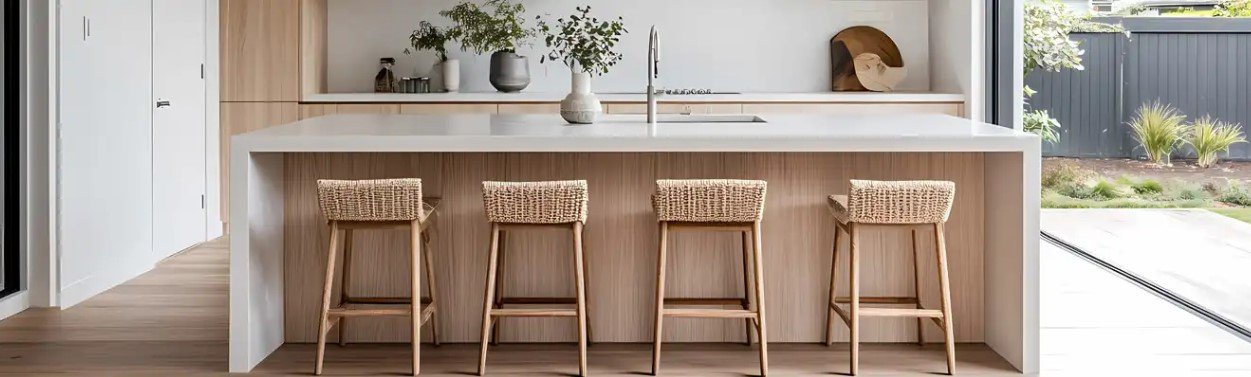
- Modern / Contemporary: Clean lines, neutral colours, slim frames paired with minimalist kitchens and designer sofa sets.
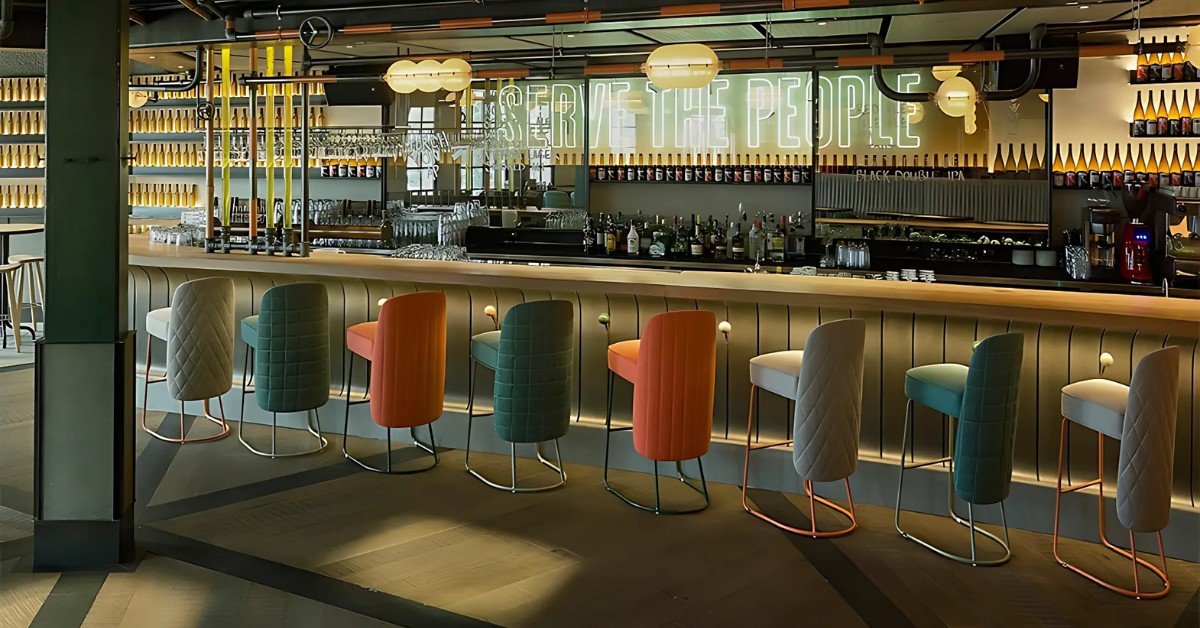
- Industrial: Raw metal, distressed finishes ideal for loft-style apartments and open kitchens.
- Traditional / Classic: Carved wood, warm finishes complement heritage-style dining chairs.
- Rustic / Farmhouse: Reclaimed wood, natural tones suit country-style kitchens and wooden dining tables.
- Mid-Century Modern: Curved forms, retro colour pops matches relaxing chairs and vintage décor.
How Do You Match a Bar Stool with Your Existing Furniture?
Follow the “two of three” rules – match at least two elements (material, colour, or design era) with your existing furniture. If your dining table is walnut wood, pick a stool with a walnut seat.
If your living room has a grey designer sofa set, choose stools with grey upholstery or a grey metal frame. This keeps your home interiors furniture cohesive without making every piece look identical.
What Comfort Features Should You Check Before Buying?
Comfort goes beyond padding. A well-designed bar stool supports your back, legs, and posture even during long meals or conversations.
- Backrest: Low or mid-height backs give spinal support without blocking sightlines; full-back stools suit primary dining spots.
- Footrest: Reduces leg strain and encourages relaxed posture essential for stools taller than 70 cm.
- Seat Padding: High-density foam holds shape longer than fibre fill; aims for 38–45 cm seat width for most adults.
- Armrests: Add comfort but increase width always confirm they slide under your counter before buying.
- Swivel Function: A 360-degree swivel lets users turn easily without moving the stool, ideal for open-plan kitchens.
Spacing and Quantity Guide
Proper spacing prevents a cramped counter. Measure the total length of your counter or bar top. Allow 53 to 61 cm (21 to 24 inches) of counter space per stool. The center of one stool should be about 66 to 76 cm (26 to 30 inches) from the center of the next.
Divide your counter length (in cm) by 60. The result is the maximum number of stools that fit comfortably. For example, a 180 cm island fits three stools with a proper elbow room.
What Safety Standards Should a Bar Stool Meet?
A safe bar stool protects your family from tipping, breakage, and chemical exposure. Check these markers when buying from any furniture manufacturer or retail store.
- Weight Capacity
- Anti-Tip Base
- Non-Slip Floor Pads
- BIS / ISI Certification
- Low-VOC Finish
Bar Stool Buying Checklist: 10 Steps Before You Purchase
- Measure your counter height from floor to underside of the countertop.
- Subtract 25–30 cm to find your ideal seat height.
- Measure counter length and divide by 60 cm to get the number of stools.
- Decide on material based on your kitchen style and maintenance preference.
- Choose a style that matches at least two elements of your existing décor.
- Test backrest and footrest comfort if buying in-store.
- Check weight capacity on the product label (aim for 100 kg+).
- Verify floor pads are included to protect your flooring.
- Confirm armrest clearance under the counter if choosing stools with armrests.
- Request a warranty of at least one year on the frame and mechanism.
Need help choosing the right bar stool?
Visit Palazzo Furnitures in Ahmedabad or call us for a free consultation. Browse our full collection on our website.
Get Free ConsultationLifespan and Maintenance Tips
A well-made bar stool lasts 5 to 15 years depending on the material and usage.
- Wood: Wipe with a damp cloth weekly. Apply wood polish or oil every 3–6 months to prevent drying and cracking.
- Metal: Clean with a soft, damp cloth. Check joints and bolts every 6 months. Tighten any loose screws promptly.
- Upholstered / Leather: Vacuum fabric seats monthly. Wipe leather with a specialized conditioner every 2–3 months. Blot spills immediately.
- Plastic: Wash with mild soap and water. Keep away from direct sunlight to prevent fading and brittleness.
Using Bar Stools Outdoors
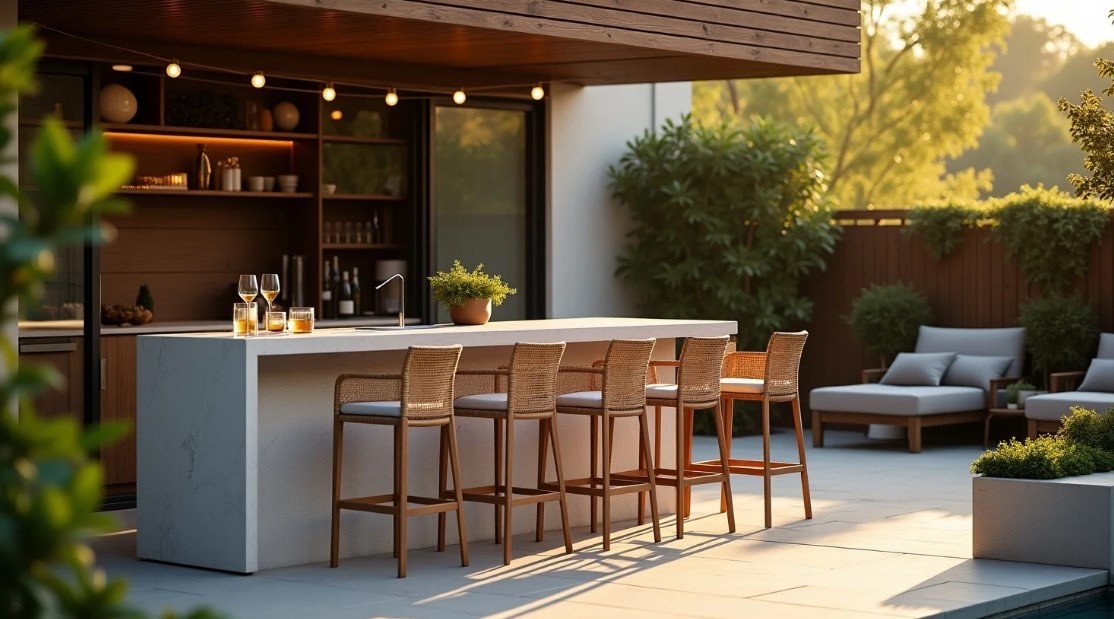
Bar stools can work outdoors — but only if they are designed for it. Powder-coated aluminium, weather-resistant rattan, and UV-treated plastic handle sun, rain, and humidity, while standard wood and fabric stools will warp, fade, or develop mould outside.
Choose outdoor-rated bar stools and pair them with weather-proof outdoor furniture from a trusted furniture showroom. Explore our Outdoor Furniture collection at Palazzo Furnitures — we stock weather-resistant options for every budget.
Why Choose Palazzo Furnitures for Your Bar Stools?
Palazzo Furnitures is Ahmedabad’s trusted name in home interiors furniture. Our showroom features a handpicked selection of high-chair-bar stools, designer sofa sets, dining tables, dining chairs, relaxing chairs, exquisite luxury beds, bedside tables, and outdoor furniture — all sourced from leading furniture manufacturers.
Every product is checked for build quality, comfort, and design before it reaches our floor. Our team helps you match the right stool to your counter, your interior style, and your budget.
Ready to find your perfect bar stool?
Visit Palazzo Furnitures in Ahmedabad or call us for a personalized quote.
Frequently Asked Questions (FAQs)
1. What is the ideal height for a kitchen counter bar stool?
The seat should be 25–30 cm below the counter surface. For a standard 90 cm Indian kitchen counter, a stool with a 60–65 cm seat height works best.
2. Are adjustable bar stools better than fixed-height ones?
Adjustable stools are more versatile for families with kids and adults. Fixed stools are sturdier and often more affordable.
3. Which bar stool material is the easiest to clean?
Metal and plastic stools are the easiest. A damp cloth wipe is usually enough. Faux leather is also low-maintenance and stain-resistant.
4. How much space should I leave between two bar stools?
Leave 66 to 76 cm (26 to 30 inches) between the centers of two adjacent stools for a comfortable elbow room.
5. Can I use indoor bar stools on my balcony?
No. Indoor stools are not treated for sun, rain, or humidity. Use outdoor-rated stools made of aluminum, treated wood, or UV-resistant plastic.
6. Do bar stools need a backrest?
A backrest is not mandatory, but it greatly improves comfort for meals and long conversations. Backless stools save space and tuck under the counter easily.
7. What weight capacity should a bar stool have?
A good-quality stool should support at least 100 to 120 kg. Always check the manufacturer’s specification sheet before buying.
8. Where can I buy premium bar stools in Ahmedabad?
Palazzo Furnitures is Ahmedabad’s leading furniture showroom offering highchair-bar stools, dining chairs, designer sofa sets, exquisite luxury beds, and outdoor furniture. Visit our showroom.